Skip to content
SUGA GROUPTHE UNIVERSITY OF OSAKA

SUGA GROUP / ORGANIC & COMPUTATIONAL CHEMISTRY

Beyond
the familiar.

A world of molecules beyond our imagination.
CHEMICAL SPACE / CONCEPTUAL VISUALIZATION
THE UNKNOWN

Searching for molecules beyond our imagination.

What properties might emerge from molecules beyond our imagination? Suga Group explores uncharted chemical space using molecular transformation rules and computational power. We search for molecules with new properties and functions entirely within the computer, from molecular generation through property evaluation. In the laboratory, we synthesize the molecules we discover and test their properties. For polymer materials that are difficult to explore through computation alone, we create structures and investigate their properties experimentally, working toward new materials.

Our research ↘

FROM THE GROUP

News & upcoming events

View all ↗

Latest news

01 / RESEARCH

Research

Explore our research ↗
01CHEMICAL SPACE

Chemical space construction and molecular exploration

Beyond the reach of intuition.

We design molecular transformation rules to build networks of connected molecules within chemical space. Using quantum chemical calculations and other methods to evaluate their properties, we explore these networks for π-conjugated molecules with new properties and functions.

Read more ↗
02ORGANIC SYNTHESIS

Synthesis and functional exploration of π-conjugated molecules

Bringing molecular outliers to life.

We search for π-conjugated molecules with distinctive properties that depart from the trends expected from their structures. Through synthesis and measurement, we identify the features of their molecular frameworks responsible for these properties, opening the way to new molecular functions.

Read more ↗
03POLYMER SCIENCE

Polymer structure control and mechanical properties

Shaping new responses, inside and out.

We control macroscopic shapes through 3D printing and nanoscale internal structures through polymerization-induced microphase separation (PIMS). We investigate how each affects mechanical properties and aim to combine the two to create polymer materials with new mechanical responses.

Read more ↗

02 / PEOPLE

Our group

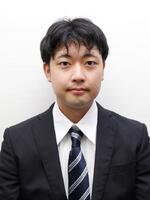
Kensuke Suga

GROUP LEADER

Kensuke Suga

Graduate School of Science
The University of Osaka
Assistant Professor

Connecting computational chemistry, organic synthesis, and polymer science through molecular exploration.

Full profile ↗

Students

Project students

Alumni & past visitors

M1/M2: master’s year 1/2. B4: undergraduate year 4.

03 / SELECTED WORK

Selected publication

All research output ↗

2026Article

Defining a Chemical Space of π-Conjugated Hydrocarbons by Unit-Based Construction

We developed CARBOT, a molecular generation method that defines a chemical space of π-conjugated hydrocarbons through structural transformation rules. By systematically generating diverse molecular frameworks, it provides a foundation for molecular exploration.

Kensuke Suga*, Hayato Takahashi, Kei Terayama, Masato Sumita, Shohei Saito

Journal of Chemical Information and Modeling, 66 (9), 5260-5271 (2026).

04 / JOIN THE GROUP

Discover new properties.
Make the discovery your own.

Search for molecules through computation. Synthesize them yourself and test their properties. Create polymer structures and investigate their mechanical responses. At Suga Group, we develop research topics with your interests as the starting point.

We welcome undergraduate, master’s, and doctoral students, including those joining us from other universities or overseas. Prior experience in organic synthesis, quantum chemistry, or programming is not required. You will develop the knowledge and skills you need through research.

Arrange a visit or online meeting ↗

Inquiries are welcome at any time. Please email us to arrange a meeting.

01Choosing a research topic

Suga sets the initial research topic after discussing your interests and preferences. As you learn how to conduct research, you will have more opportunities to develop your own questions and directions, with increasing autonomy.

02Discussion and supervision

At the beginning, we discuss your work as often as needed, including daily. Once you can work independently, we still meet for a research discussion at least once every two weeks.

03Freedom to explore

We value students’ ideas and the freedom to pursue small exploratory trials of their own. Before taking an idea forward as a full research project intended for publication, discuss it with Suga and obtain his approval.

04Getting in touch

We welcome requests for laboratory visits and online discussions at any time. In your email, please share your institution, year of study, research interests, intended start date, and preferred meeting format, where possible. You are welcome to get in touch even if you have not yet decided on a specific research topic.

sugak24@chem.sci.osaka-u.ac.jp

05 / COLLABORATION

A molecular question.
A shared exploration.

“If only a molecule had these properties.” We turn such questions into concrete molecular exploration. Combining collaborators’ expertise with our exploration framework, we search for new molecular candidates while considering the target properties and synthetic feasibility.

We welcome inquiries from universities, research institutes, and companies. We can work together to shape a research approach from the initial idea stage, even before target molecules or evaluation methods have been defined.

Typically, Suga Group contributes molecular exploration and computation, combined with synthesis or specialized evaluation by our collaborators. We agree on roles based on the research goals and each partner’s expertise. Other arrangements are welcome; please tell us about the questions you would like to explore.

Discuss a collaboration ↗

06 / CONTACT & ACCESS

Contact

Suga Group
Graduate School of Science
The University of Osaka
Kensuke Suga, Assistant Professor

Visits, study, and research collaboration

sugak24@chem.sci.osaka-u.ac.jp

Laboratory visits and online meetings are welcome. Please email us in advance to arrange a time.

Location

Room G-415, School of Science
The University of Osaka
1-1 Machikaneyama, Toyonaka, Osaka 560-0043, Japan